Odoo Footwear ERP Ready to Go Live
Complete Footwear ERP Solution
Streamline your Footwear operations - optimize , reduce costs, end-to-end tracking from procurement to sale
Inventory Management
A footwear retail store typically maintains several hundred footwear styles, which further expand into thousands of variants based on size, color. Since footwear sales are highly dependent on correct size availability and comfort, inventory must be maintained accurately and handled with close control.
Footwear Inventory Control
- Footwear is categorized by usage: Men, Women, Office, Sports, and College wear.
- Each footwear product includes size and color variants tracked separately in inventory.
- All footwear items are boxed individually, with inventory managed at box level.
- Footwear are tracked by quantity and Lot tracking is used only in rare cases.
- Automatic replenishment is configured for high-demand and fast-moving footwear.
- Popular sizes and variants can be reserved for pending online or in-store orders.
- Detailed reports track stock levels, movements and variant availability efficiently.
Footwear Stock Operations
- Footwear accessories like socks and shoe brushes are maintained in inventory.
- Inventory adjustments occur for damaged items, returns, or stock discrepancies.
- Footwear not fit for sale, including display or model pairs, is recorded as scrap.
- Regular internal stock transfers are done between these locations.
- After quality checks, footwear is moved to Shop Floor or Back Store/Stock Room.
- Supplier barcodes are used for branded footwear products for easy tracking.
- Manual barcodes can be created for unbranded footwear to maintain inventory.
Footwear Products

Point Of Sales
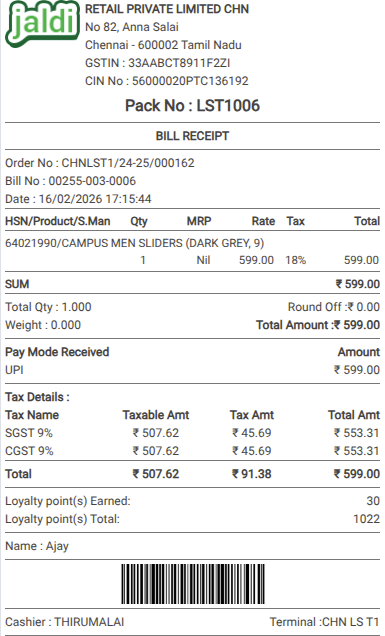
Most sales in a footwear retail business happen through walk-in customers at the store counter. Customers try the footwear to check for fit, comfort, size, style, and price before making a purchase.
Retail Billing Process
-
At the POS counter, footwear is added to the bill by scanning the barcode or searching the product.
-
Stock is updated automatically in real time after each sale transaction.
Product Pricing Method
- For branded footwear, the selling price is set equal to the printed MRP.
- For unbranded, the selling price is set as cost plus a defined markup.
Linking Salesperson to Orders
- The salesperson assisting the customer is linked to the order in the POS system.
- This ensures proper customer assistance for fit, comfort and style selection.
Handling Size and Style Exchanges
- In footwear retail, exchanges for different sizes or styles are common.
- These exchanges are easily handled in the POS system, with inventory updated automatically.

Purchase Management
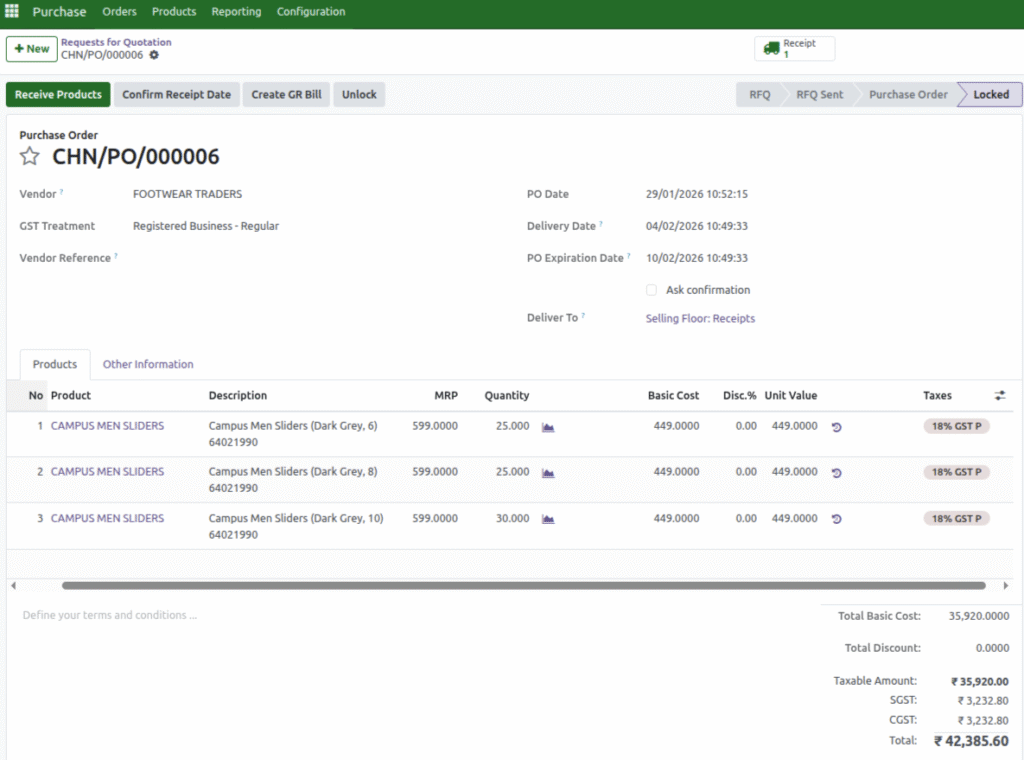
In a footwear retail business, purchases are carefully planned and controlled because footwear comes in many sizes and variants and is not a fast-moving commodity for every style. Buying decisions are based on seasonal demand, fast-moving designs, and past sales trends.
Sales Management
Footwear retailers frequently receive large bulk orders from schools, corporate clients, and sports academies for uniform and specialized footwear needs.
Sales and Order Operations
- Sales quotations created with special pricing.
- Sales order confirmed after approval.
- Stock reserved to avoid size shortages.
- Scheduled deliveries tracked.
- Partial deliveries handled when sizes arrive separately.
- Customer-specific pricelist and discounts applied.
- Automated follow-ups for pending payments.
- Returns and exchanges processed seamlessly.
- Sales reports track orders, revenue, and customer trends.

E-Commerce Management
Footwear businesses reach customers by selling products online through their own websites and popular e-commerce marketplaces.
eCommerce Sales and Warranty
- Footwear displayed with Size chart, Color options, Usage type and Brand details.
- Customer places order on eCommerce and sales order is created automatically.
- Payment and delivery status are monitored and updated in real-time.
- Warranty primarily applies to branded, sports, and premium footwear.
- Typical warranty coverage includes sole defects and manufacturing faults.

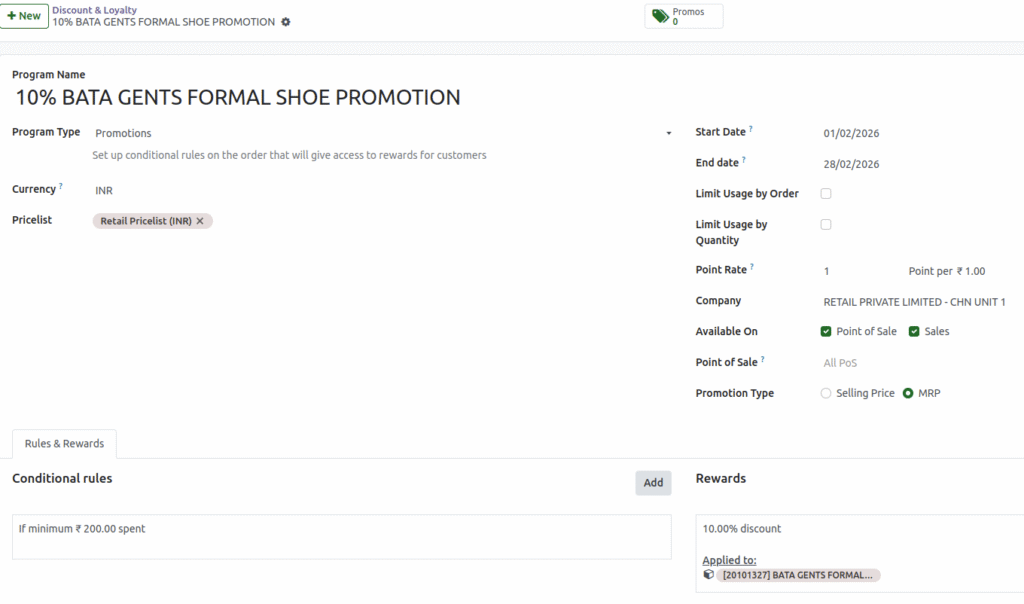
Promotions and Loyalty Programs
In a footwear retail business, pricing discounts and loyalty programs help attract customers , encourage repeat purchases and protect profit margins.
Special Offers & Rewards
-
Seasonal footwear promoted online and offline sales.
-
Slow-moving sizes are sold through website or in-store offers.
-
Customers earn loyalty points or rewards on each footwear purchase.
-
Earned points can be redeemed on future purchases.
- Automated discount campaigns applied on selected footwear categories.