Segmentation Of Customers Using RFM Analysis

Customer Segmentation : RFM Analysis
Hypermarket chains generate large volumes of customer transaction data daily across multiple stores. This extensive database requires analysis to design better supply chain strategies and improve customer engagement. RFM (Recency, Frequency, Monetary) analysis enables customer segmentation based on purchase behavior patterns.
Learn about customer engagement methods or explore Pentaho data science solutions for comprehensive customer analytics.
In this guide, we’ll learn how customer segmentation is done using RFM parameters: number of days since last purchase (Recency), total number of products purchased (Frequency), and total amount spent (Monetary).
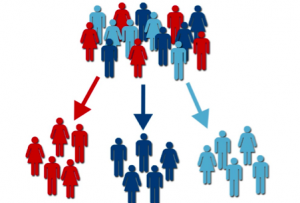
Customer segmentation is the process of grouping the customers as clusters based on their common characteristics. Below figure conveys the results after doing segmentation.
**Importance of Customer Segmentation : **
- Helps in finding potential customers.
- All the customers will not have same choices, opinions & importance.
- To improve quality of service, loyalty, retention.
- Customizing offers to improve marketing efficiency in an omnichannel environment.
- Providing management with a tool for measuring the performance of promotional offers (by type of offer, by segment, by channel, etc.)
- It provides opportunities for up-selling and cross-selling.
- It helps understanding the customers better and helps in improving the relationships with the customer.
- It helps companies to stay a step ahead of competitors.
**Types of segmentation: **
- Behavioral
- Demographical
- Psychological
- Geographical
Data Preparation & EDA for RFM Analysis
Data is collected from various sources and loaded to data warehouse using Pentaho 10.2 Data Integration. The Pentaho 10.2 Data Integration Tool performs the cleansing, transformation, applying rules and stores in staging data warehouse.
This data is further used for the exploratory data analysis, creating data pipeline and building model.
Customer segmentation using RFM analysis:
RFM (Recency,Frequency,Monetary) is a behaviour-based approach grouping customers into segments. It groups the customers on the basis of their previous purchase transactions. It gives better view of customers purchasing, spending and time gap of their purchases.
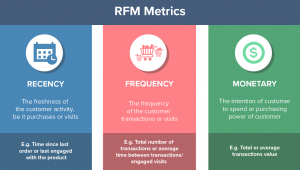
Theoretically we have segments like
- low value customers[less active + less frequent buyer]
- mid value customers[fairly frequent buyer].
- high value customers[highly active customer + revenue generator].
Use- Cases For RFM Analysis :
Industry
Roles
**Retail **
In Retail customer segmentation plays the major role in launching of new products in the market.
Telecom
In Telecom industry customer segmentation will involve in launching New bill plans,Promotional Features etc.
Banking & Financial
In Banking and financial customer segmentation will takes part in terms of Loans,Mutual Funds,Stocks and even for fraud detection.
Human Resource
In Human Resource customer segmentation will evolve in churning process and Pay-Roll process.
**Conclusion : **
In this blog, we have covered details about Customer Segmentation. We have learnt what the customer segmentation is, Need of Customer Segmentation, Types of Segmentation, RFM Analysis.
Frequently Asked Questions
What is RFM analysis for customer segmentation?
RFM (Recency, Frequency, Monetary) analysis enables customer segmentation based on purchase behavior patterns. RFM analyzes how recently customers purchased (Recency), how often they purchase (Frequency), and how much they spend (Monetary), enabling targeted marketing and supply chain optimization.
How does Pentaho 10.2 enable RFM analysis?
Pentaho 10.2 enables RFM analysis through faster data processing (2-3x with Java 17), integrated analytics tools (R and Python for RFM calculations), data quality assurance (250+ quality rules), real-time dashboards with intelligent query caching, and self-service analytics for marketing teams.
What are the benefits of RFM customer segmentation?
Key benefits include targeted marketing (identify high-value customers), supply chain optimization (design better strategies), customer engagement improvement (personalized experiences), revenue optimization (focus on high-value segments), and data-driven decision-making (based on purchase behavior).
How does RFM analysis help with supply chain optimization?
RFM analysis helps with supply chain optimization by identifying customer segments (low/mid/high value), enabling data-driven supply chain strategies, optimizing inventory based on customer demand patterns, and improving customer engagement through targeted approaches.
What customer segments does RFM identify?
RFM identifies customer segments including low value customers (less active + less frequent buyer), mid value customers (fairly frequent buyer), and high value customers (highly active customer + revenue generator), enabling targeted marketing and supply chain strategies.
How does Pentaho ensure data quality for RFM analysis?
Pentaho ensures data quality for RFM analysis through 250+ predefined quality rules, AI/ML-powered anomaly detection, integrated data quality validation ensuring analysis inputs are accurate, and complete lineage tracking providing audit trails from transaction data to customer segments.
Can Pentaho provide real-time RFM customer insights?
Yes. Pentaho provides real-time RFM customer insights through intelligent query caching providing instant insights into customer segments, real-time dashboards for marketing teams, interactive visualizations of RFM segments, and self-service analytics enabling exploration of customer data without IT assistance.
🎯 Ready to segment customers using RFM analysis?
RFM analysis enables customer segmentation based on purchase behavior patterns, enabling targeted marketing and supply chain optimization. Learn how Pentaho can help you analyze customer transaction data and design better supply chain strategies.
Contact TenthPlanet for expert Pentaho RFM analysis and customer segmentation services.
Note: This guide provides a comprehensive overview of RFM customer segmentation using Pentaho 10.2. Actual implementations may vary based on specific customer transaction data, retail verticals, and analytical requirements. Refer to Pentaho documentation for the most current analytics capabilities.
Related Resources:
- Customer Engagement Methods Guide
- Pentaho Data Science Solutions
- Always-On Inventory Guide
- TenthPlanet Pentaho Services
