How to view Customer Ledger Report in Adempiere Retail
A Customer Ledger Report shows all financial transactions for each customer, including invoices, payments, credits, and outstanding balances over a selected period.
User Access
Who Can Access
- Admin
- Back Office
- Purchase Manager
- Manager
What User Can Do
- View Complete Transaction History
- Track Outstanding Balances
- Analyze Customer Payment Behavior
- Export and Share
Prerequisite Activities
- Maintain Detailed Transaction Records
- Assign Unique Customer IDs
- Reporting Period
- Update Payment Status Promptly
Business Rules
- Include All Transaction Types
- Date Range
- Exclude Cancelled or Voided Entries
- Unique Customer Identification
- User Authorization
- Export Data Integrity
User Interface
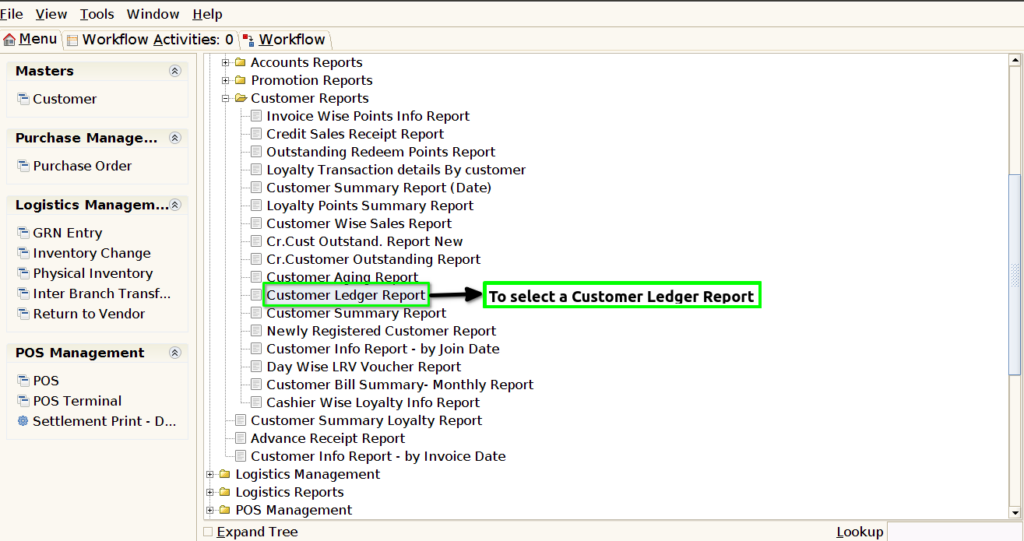
STEP 1: To select a Customer Ledger Report.
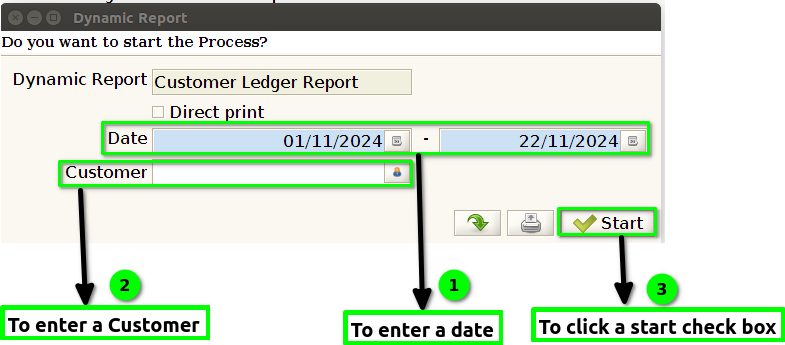
STEP 2: To enter a date in this field is mandatory and to enter a customer filed.Then to click the start check box to run the process.
STEP 3: Once to complete the process to show the report based on the given data.
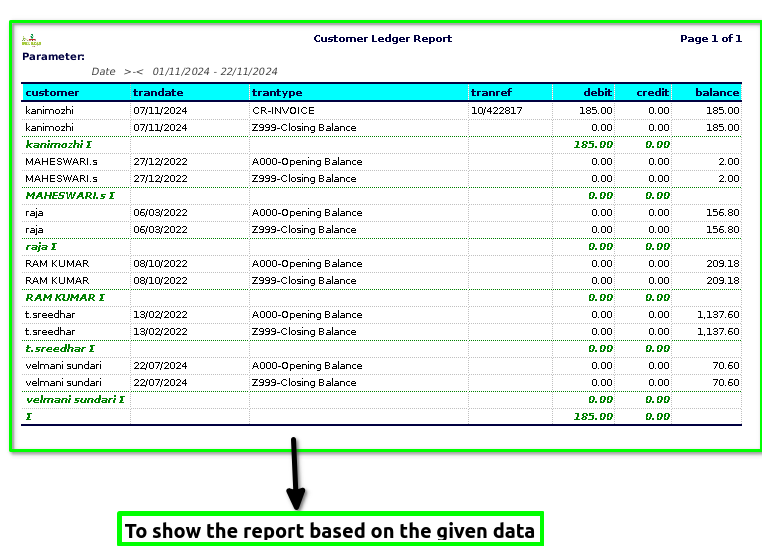
STEP 4: Customer name – refers to the name of the customer (individual or organization) associated with each transaction recorded in the ledger.In this report helps identify which customer each transaction is associated with.
Transaction Date – refers to the specific date on which a financial transaction took place between a business and a customer.A unique identifier for each transaction.
Transaction type – refers to the nature or category of a financial transaction that has occurred between the business and the customer.
Transaction reference – is a unique identifier or code assigned to each individual transaction that is recorded in the system. It helps track and reference specific transactions related to a customer in the ledger.
Debit – refers to an entry made in an accounting system to record an increase in assets or a decrease in liabilities or equity.
Credit – refers to the ability to borrow money or access goods and services with the promise to pay for them later, typically with interest or other terms.
Balance – refers to the total amount of money that is either owed by the customer (if the balance is positive) or the amount that the customer has overpaid or has a credit (if the balance is negative).