How to view Vendor Ledger Report in Adempiere Retail
A Vendor Ledger Report is a detailed record of all financial transactions between your company and a specific vendor over a period of time.
User Access
Who Can Access
- Admin
- Back Office
- Purchase Manager
- Manager
What User Can Do
- Track Payables
- Monitor Payment History
- Support Vendor Communication
Pre-Requisite Activities
- Record All Transactions
- Maintain Invoice References
- Reporting Period
- Reconcile Vendor Balances
Business Rules
- Unique Vendor Identification
- Timely Data Entry
- Report Period Consistency
- Opening and Closing Balance Accuracy
User Interface
STEP 1: Click Purchase Reports Folder.

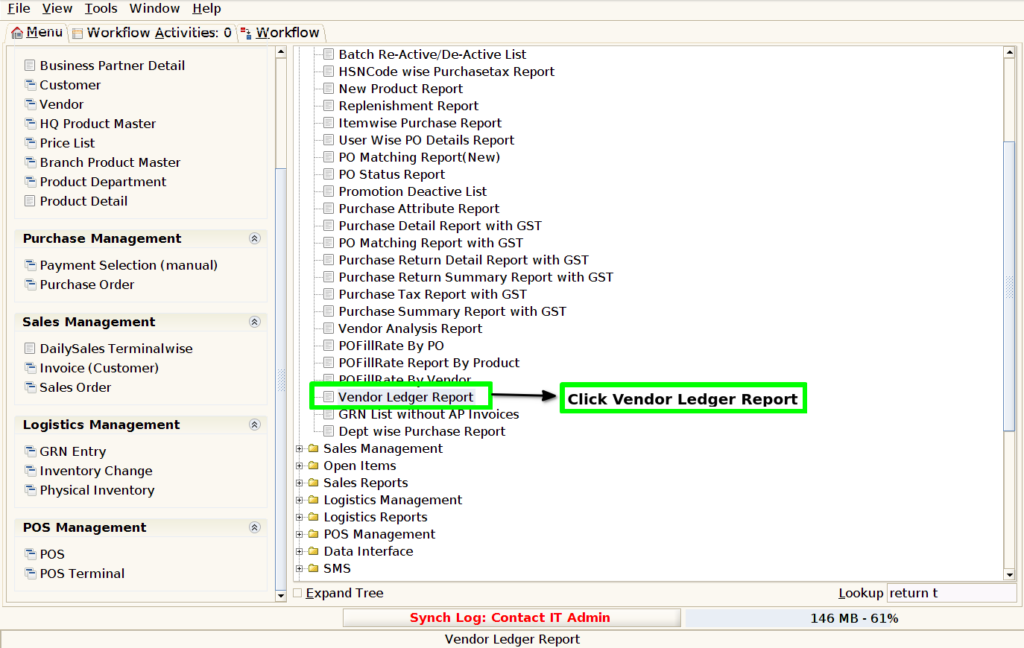
STEP 2: Click Vendor Ledger Report.
STEP 3: Choose Parameter From Date, To Date and Vendor Mandatory.

STEP 4: To show the report based on the given data.

STEP 5: Vendor – refers to a supplier or business partner from whom an organization purchases goods or services. The report provides detailed information about the financial transactions between the organization and its vendors, often used to track outstanding payables, payments made, credits, and overall vendor balances.
Tran Date – typically refers to the Transaction Date. This is the date on which a specific financial transaction (such as an invoice, payment, or credit) was recorded in the system.
Tran Type– can refer to the type of transaction, such as a deposit, withdrawal, transfer, or other financial activities. This classification helps financial institutions identify the nature of the transaction for processing or reporting purposes.
Tran Ref – typically refers to a transaction reference. This is a unique identifier or reference number associated with a particular transaction between the business and a vendor. The “Tran Ref” is often used to track and link specific transactions such as payments, invoices, or credits in the system.
Vendor Reference (Vendor Ref) – typically refers to an identifier or code that helps track and distinguish specific transactions or interactions between a company and its suppliers.
Credit – refers to the ability of a borrower to access funds or goods and services with the promise to repay them in the future, typically with interest.
Debit – refers to an entry recorded on the left side of an account in accounting, reflecting an increase in assets or an expense, or a decrease in liabilities or equity. In the context of financial transactions, a debit can also refer to money taken directly from a bank account, typically via a debit card or automated transaction.
Balance– refers to the outstanding amount owed to or by a specific vendor at a particular point in time. It represents the difference between the total amounts billed (invoices) by the vendor and the payments or credits made to that vendor.