How to view Storage Detail Report in Adempiere Retail
A Storage Detail Report is a document that provides information about where products or items are stored.
User Access
Who Can Access
- Admin
- Head cashier
- Sales Manager
- Manager
What User Can Do
- View Storage Locations
- Track Inventory
- Monitor Storage Conditions
- Plan for Restocking
Pre-Requisite Activities
- Inventory Listing
- Storage Locations
- Product Categorization
Business Rules
- Accurate Storage Location Tracking
- Inventory Organization
- Space Management
- Product Rotation
User Interface
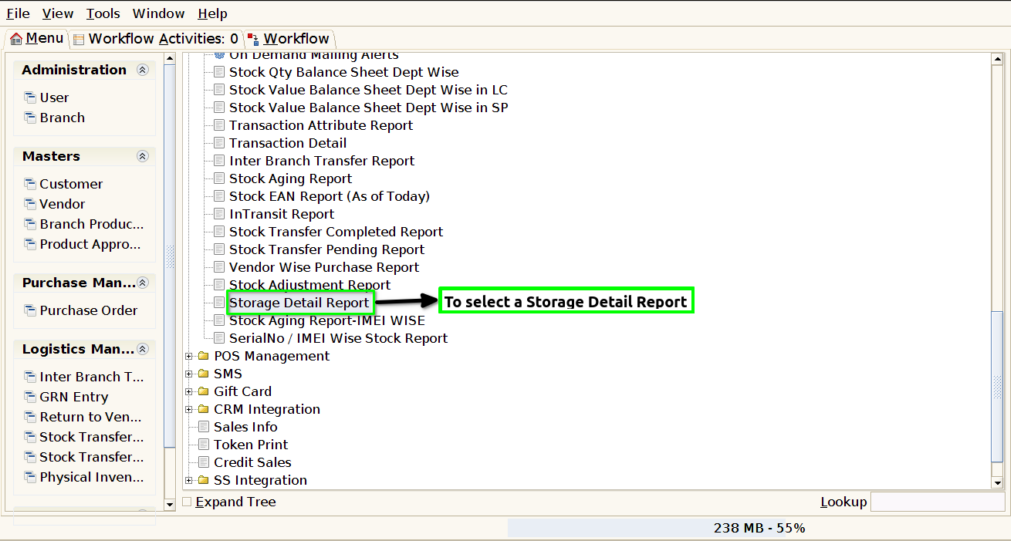
STEP 1: To select a Storage Detail Report.
STEP 2: To enter a Dynamic Report its default Update.And then to select any parameter based on our requirements.Then to click the Start check box.To run the process.

STEP 3: Once to complete the process show the report based on the given parameter.

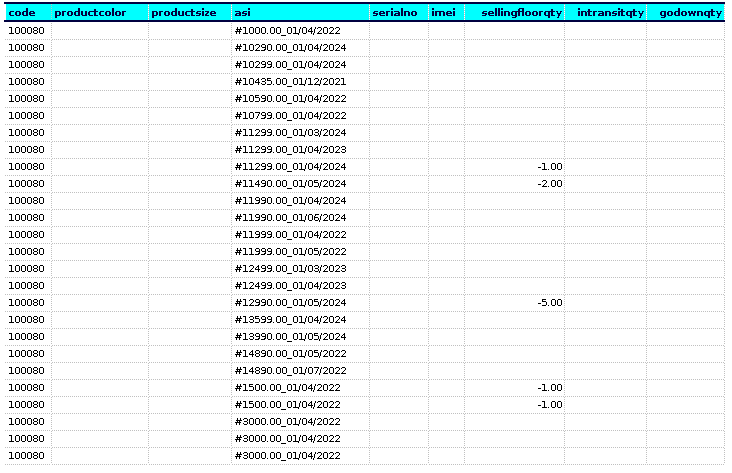

STEP 4: Product code:A product code is a unique identifier assigned to a specific product or item, used to distinguish it from other products -SKU (Stock Keeping Unit).A unique code used by retailers to track inventory and sales.UPC (Universal Product Code)-A standardized barcode used in retail to identify products at the point of sale.EAN (European Article Number)-A similar barcode system used internationally to identify products.Product codes are essential for inventory management, sales tracking, and logistics, as they simplify the process of locating and managing items in databases or inventory system.
Product name:A product name is the title or label given to a specific item that describes what it is or what it does. It helps customers identify and differentiate the product from others in the market. For example, “Apple iPhone 14,” “Nike Air Max Sneakers,” or “Organic Almond Butter” are all product names. Brand Recognition,Marketing,Search ability.
Brand:A brand is a unique identity that distinguishes a company or product from others in the market. It encompasses various elements, including the name, logo, design, messaging, and overall reputation.Brands can represent individual products (like Nike or Apple) or entire companies (like Coca-Cola or Samsung).
Item type:Item type refers to the classification or category of a product based on its characteristics, usage, or purpose.Understanding item types helps in inventory management, marketing, and sales strategies.
Product design:Product design is the process of creating and developing a new product or improving an existing one, focusing on functionality, aesthetics, usability, and user experience.
Product color:Product color refers to the specific hue or shade assigned to a product, which can significantly influence customer perception and buying decisions. Color plays a vital role in branding and marketing, as it can evoke emotions and convey messages.Brand Identity,Aesthetics,Market Trends,Functionality.
Product size:Product size refers to the physical dimensions or scale of a product, which can include measurements such as height, width, depth, and weight. Size is an important aspect for several reasons:Fit and Usability,Packaging and Shipping,Consumer Preferences.
ASI: ASI typically stands for Advertising Specialty Institute. It is an organization that serves the promotional products industry, providing resources, education, and networking opportunities for suppliers, distributors, and professionals involved in promotional products.
Serial no:A serial number is a unique identifier assigned to an individual product or item, distinguishing it from others of the same model or type. It typically consists of a combination of letters and numbers.
IMEI:IMEI stands for International Mobile Equipment Identity. It’s a unique 15-digit number assigned to mobile devices, such as smartphones and tablets.
Selling floor,Go down,In transit,Return warehouse,Ground floor Qty:“Floor quantity” refers to the amount of stock that is displayed or available on the sales floor of a retail store at any given time.
On hand Qty:On-hand quantity” refers to the actual number of units of a specific item that are physically available in inventory at a given time.
MRP: MRP stands for Material Requirements Planning. It is a production planning, scheduling, and inventory control system used to manage manufacturing processes. The main goals of MRP are to ensure that materials and products are available for production and delivery while minimizing inventory costs.
Category: category refers to a grouping of products or services that share similar characteristics or serve similar purposes. Categories help organize and classify items for easier navigation, inventory management, and marketing.
UOM: UOM stands for **Unit of Measure**. It refers to the standard quantity used to measure a product or service. UOM is crucial in various contexts, including inventory management, sales, and procurement, as it helps ensure consistency and clarity in transactions. Common examples of units of measure include: 1. **Pieces (pcs)**: Used for items sold individually. 2. **Kilograms (kg)**: Commonly used for weight. 3. **Liters (L)**: Used for measuring volume. 4. **Meters (m)**: Used for length or distance. 5. **Boxes, pallets, or cartons**: Used for packaging and shipping quantities.