How Cost Adjustment Works After Inventory Is Consumed in iDempiere
Cost adjustment is required when inventory has already been issued to a project, production, or sales order, but the final cost becomes available later. This typically happens when vendor invoices arrive after material consumption or when additional charges like freight are identified post-issue. iDempiere allows businesses to continue operations without waiting for final costs.
Inventory Post Consumption
Once inventory is consumed, the stock quantity is permanently reduced. iDempiere does not reverse or recreate issue transactions. Instead, the system keeps the physical movement intact and focuses only on correcting the cost value associated with the original receipt. This ensures warehouse operations remain unaffected while financial accuracy is preserved.
Cost Difference Calculation
iDempiere links the cost adjustment to the original receipt transaction. It checks how much of the received quantity has already been consumed and splits the cost difference accordingly. Any remaining stock receives an updated inventory value, while the consumed portion is treated as an expense correction.
This calculation is handled internally using the product’s costing method and accounting schema.
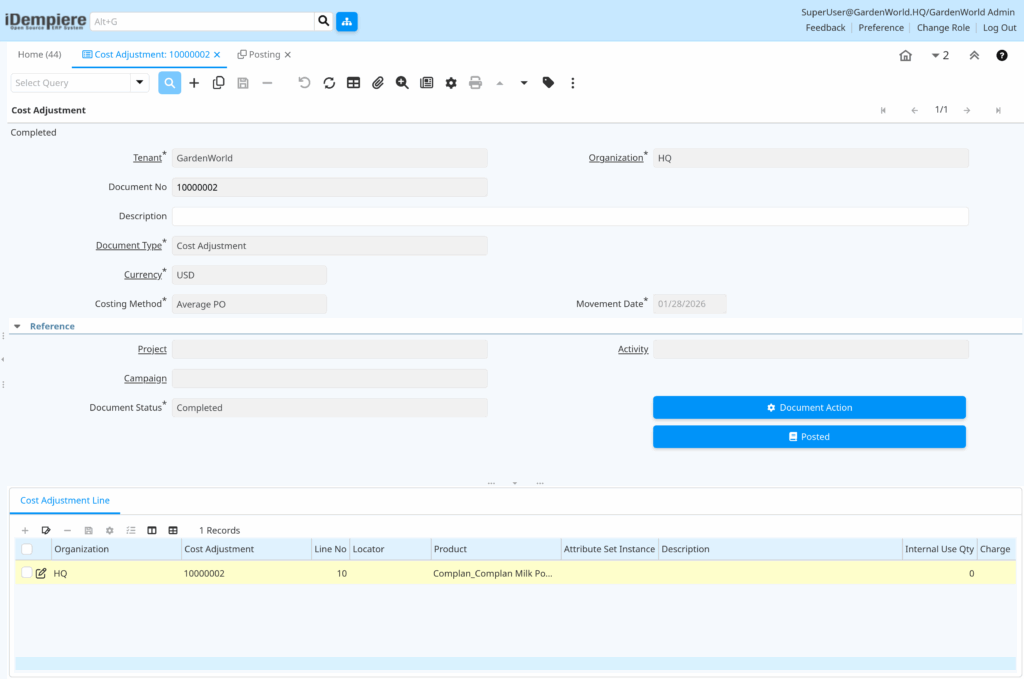
Accounting Correction
The cost adjustment generates accounting entries instead of inventory movements. If the stock was consumed, the cost difference is posted to COGS or WIP, depending on usage. The Inventory asset is only affected for quantities still on hand.
There is no need for manual journal entries or document reversal, which keeps the audit trail clean.
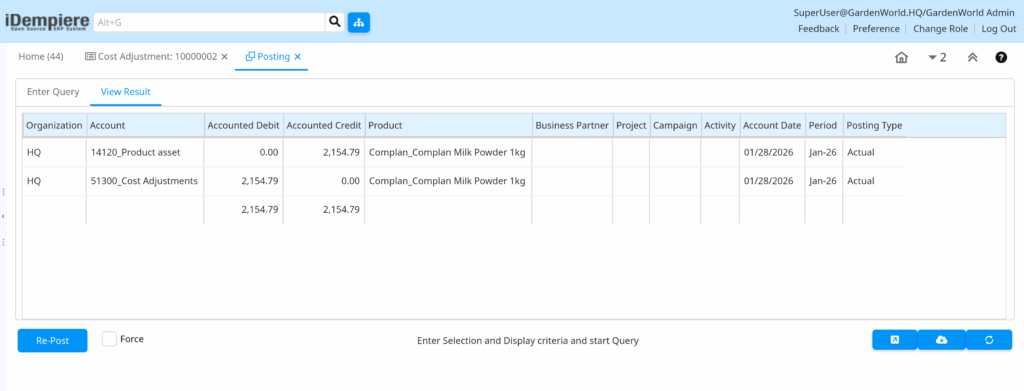
Cost Updates
For project-driven consumption, iDempiere automatically pushes the adjusted cost into the project’s actual cost. This ensures that project margins, cost summaries, and financial reports reflect the true expense, even when cost corrections happen later.
Production orders behave similarly, ensuring finished goods reflect the correct material cost.
Control and Compliance
Cost adjustments respect accounting period controls. They can only be posted in open periods, and every adjustment is fully traceable through document references and accounting facts. This ensures compliance with internal controls and external audits.
Minimal Operational Rules:
- Quantity is never changed
- Only value and accounting are corrected
This approach allows businesses—especially construction companies—to consume materials without delay while still maintaining accurate costing, project profitability, and compliant financial reporting.