How to Create and Use the RFQ in iDempiere
The RFQ header defines the commercial intent and control rules for a Request for Quotation in iDempiere. It governs supplier participation, response handling, validity, and progression, acting as the process controller for all RFQ lines, comparisons, and downstream decisions.
Process Flow Diagram
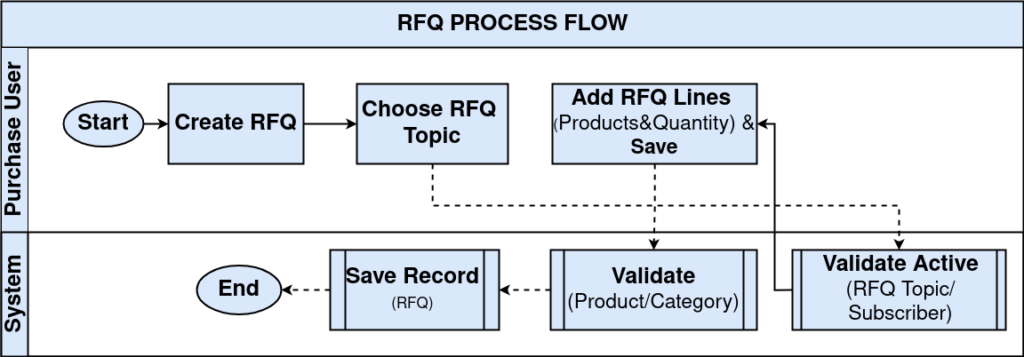
RFQ Identity and Intent
The upper section establishes what the RFQ is about and why it exists.
The document no uniquely identifies the RFQ and is used for tracking, reporting, and audits.
The name and description clearly communicate the commercial requirement to internal users and suppliers.
The comment / help field captures negotiation notes, urgency, delivery expectations, or compliance requirements.
This information sets expectations early and prevents clarification delays later in the process.

Ownership and Commercial Responsibility
The sales representative defines who owns the RFQ internally. This user is responsible for supplier coordination, response evaluation, and follow-up actions. Ownership also drives visibility in pipeline, workload, and performance reports.
This ensures that RFQs do not become orphaned or unmanaged during active sourcing cycles.
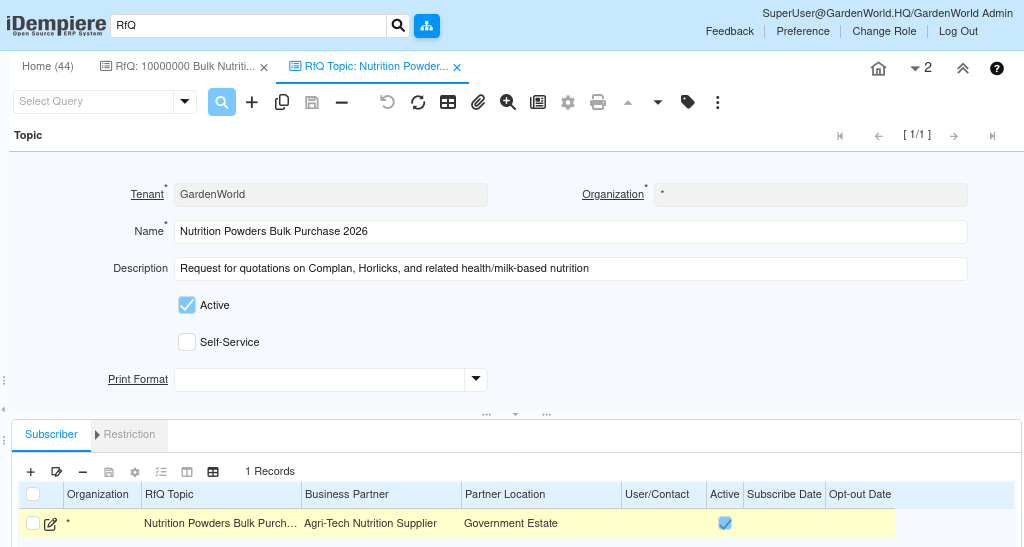
RFQ Topic and Supplier Scope
The RFQ topic links the RFQ to a predefined sourcing theme or category. This controls:
- Which suppliers can be subscribed
- Which restrictions apply
- How invitations are filtered
This avoids manual supplier selection and ensures only relevant vendors are involved.
Quotation Behavior and Response Control
The RFQ header defines how suppliers are allowed to respond.
Key behavioral controls include:
- RFQ Type – Whether suppliers quote all quantities or selected lines only
- Responses Accepted – Controls whether late or additional responses are allowed
- Self-Service – Allows suppliers to submit responses directly
- Response Date – Hard deadline for quotations
These settings enforce discipline and prevent uncontrolled or late submissions.
Timeline and Currency Context
The work start and delivery days establish expected execution timing.
The currency ensures all supplier prices are comparable without manual conversion.
These fields align commercial evaluation with operational reality.
Purpose, Use Cases, and Outcome
The RFQ header exists to standardize supplier price discovery while keeping the process controlled and auditable.
Typical use cases include:
- Bulk or strategic sourcing
- Price comparison across multiple vendors
- Pre-purchase market validation
- Negotiation before commitment
A correctly configured RFQ header ensures clear supplier communication, fair comparison, controlled deadlines, and smooth transition into RFQ lines, responses, and downstream purchasing or sales documents. It is the single control point that turns sourcing intent into a structured, measurable process in iDempiere.