How Performance Benchmark Works in iDempiere
The Performance Benchmark defines expected or target values for performance metrics in iDempiere. It creates no transactions but sets reference levels used to objectively evaluate actual results, forming the foundation for KPIs, dashboards, and analytical performance reporting.
Process Flow
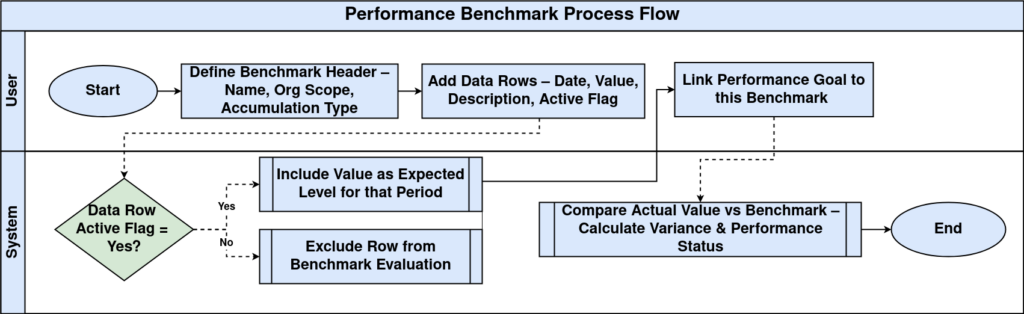
Benchmark Definition and Scope
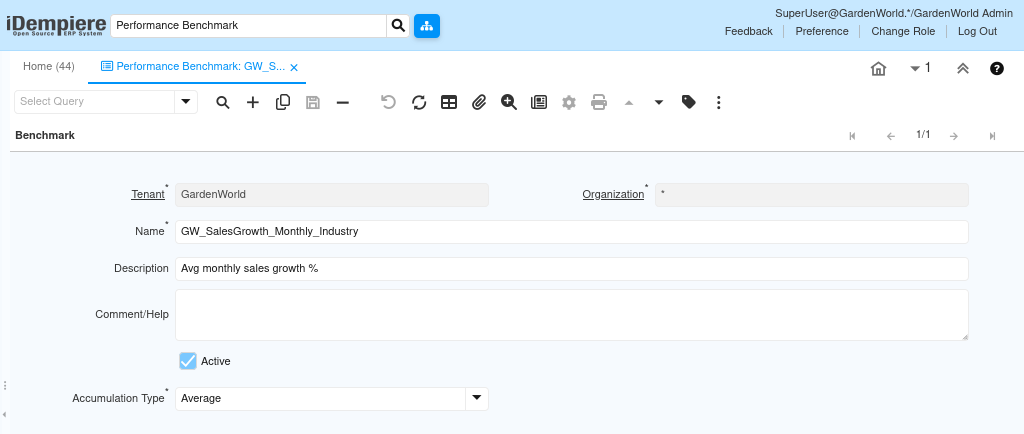
The benchmark header defines what is being measured and where the benchmark applies.
The name uniquely identifies the benchmark and is referenced by goals and reports. It usually follows a functional pattern (for example, monthly sales growth, invoice cycle time, or industry margin).
The tenant and organization control the scope:
- Organization
*makes the benchmark reusable across all organizations - A specific organization limits the benchmark to that business unit
This allows both global benchmarks and localized benchmarks to coexist without duplication.
Accumulation Logic
The accumulation type defines how benchmark values should be interpreted over time.
For example:
- Average indicates expected average performance for a period
- Other accumulation types (if configured) may represent totals or cumulative expectations
This setting directly influences how dashboards and goals compare actual values against the benchmark. Incorrect accumulation settings do not cause system errors, but they lead to misleading analysis.
Time-Based Benchmark Values (Data Tab)
The Data sub-tab is where benchmark values are defined per time period.
Each row represents the expected value for a specific date or period, allowing benchmarks to change across months or seasons.
This design supports:
- Seasonal expectations
- Growth or decline trends
- External market variations
Benchmarks are intentionally not static.

Data Row Behavior
Each benchmark data row includes:
- Date – the period the benchmark applies to
- Value – the expected performance value
- Description – explanation for that period
- Active flag – controls whether the value is currently used
Only active rows are considered when benchmarks are evaluated in goals or reports.

How the System Uses Performance Benchmarks
Performance Benchmarks are passive reference data.
They do not calculate results or enforce rules on their own.
They are consumed by:
- Performance Goals
- KPI calculations
- Dashboard widgets
- Analytical and comparison reports
The system compares actual measured values with benchmark values to calculate variance and performance status. This separation ensures benchmarks can be adjusted without altering historical transactions.
Relationship with Performance Goals
A performance goal often references a benchmark to determine success or failure.
In this relationship:
- The benchmark defines the expected value.
- The goal defines how strictly performance is evaluated.
- Actual results are compared against the benchmark during reporting.
One benchmark can support multiple goals, ensuring consistency across performance evaluation.
Purpose and Outcome
The performance benchmark exists to standardize expectations before measuring performance. Configured correctly, it enables:
- Objective performance evaluation
- Meaningful variance analysis
- Strategy-aligned dashboards
- Consistent management reporting
iDempiere evaluates performance not just on what happened, but on how it compares to what was expected.