How does the Cost Element work in iDempiere
It defines what type of cost is being tracked and how that cost behaves in inventory valuation.
In iDempiere, a Cost Element represents a specific cost component such as material, Resource, overhead and acts as a building block for product costing in iDempiere.
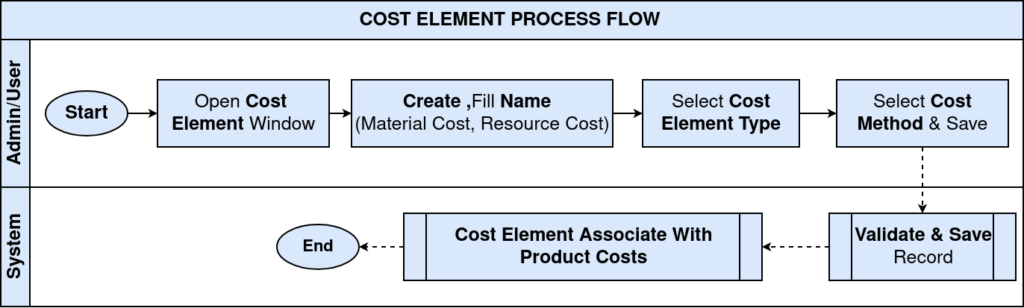
Process Flow
Purpose of a Cost Element
A Cost Element identifies why a cost exists, not just how much it is. Instead of storing a single cost value for a product, iDempiere breaks costs into meaningful components using cost elements.
This allows organizations to
- Track variances separately from standard costs
- Maintain transparent and auditable cost structures
Relationship between Cost Element and costing methods
Cost Elements work together with Cost Types and Costing Methods. Each cost element is linked to
A Cost Element type
- Burden (M.Overhead)
- Material
- Outside Processing
- Overhead
- Resource
Costing Method
- Average Invoice
- Average PO
- Fifo
- Last Invoice
- Last PO Price
- Lifo
- Standard Costing
This relationship determines how the cost is calculated, updated, and posted to accounting.

How Cost Elements are used during transactions
When inventory or production transactions occur
- The system identifies the applicable cost elements
- Costs are calculated or updated per element
For example, a Material receipt update the material cost element and Average PO Cost element, while production may also impact labor and overhead elements.
By defining clear cost elements, iDempiere enables granular cost tracking, accurate valuation, and meaningful financial analysis. Cost Elements transform raw cost data into structured insights that support better operational and financial decisions.