How RFQ Creation and Vendor Invitation Works in iDempiere
This stage controls how an RFQ is formally issued to vendors after the header and lines are prepared. It acts as the transition point between internal preparation and external supplier participation. Once executed, the system generates vendor-facing RFQ response structures and optionally notifies vendors to respond.
RFQ Readiness and Control
Before inviting vendors, the RFQ must already represent a clear, complete demand. The header defines scope and timing, while RFQ lines and quantities define what is being quoted. At this point, the RFQ behaves like a controlled commercial request rather than a draft.
Key characteristics at this stage:
- RFQ header is active and valid
- RFQ topic determines eligible subscribers
- Lines and quantities are finalized and visible for quotation
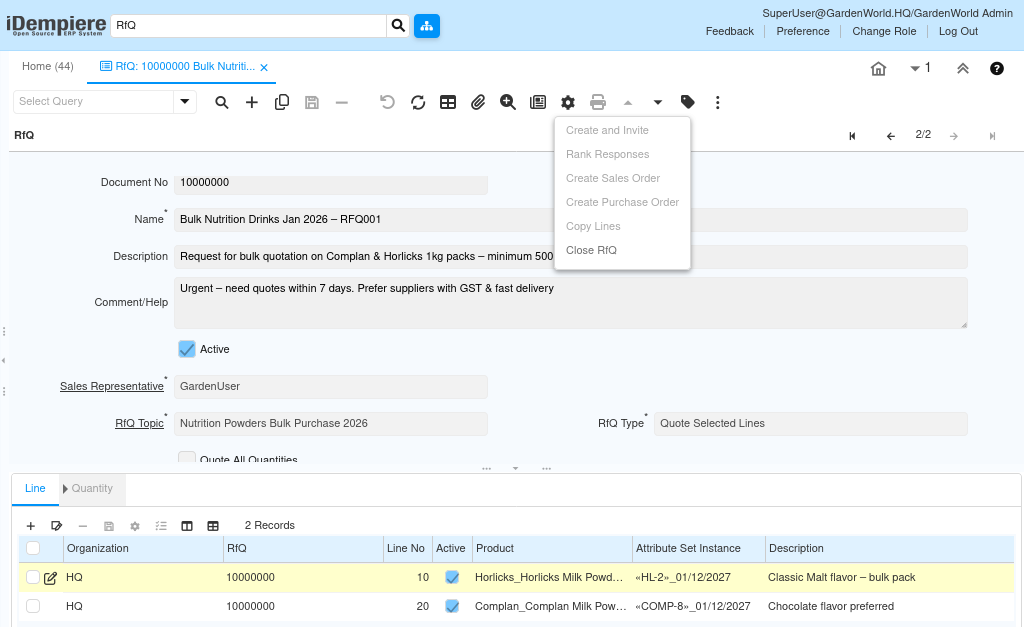
Create and Invite Execution
When the create and invite action is triggered, the system evaluates the RFQ topic and its subscribers to decide who should receive the request. For each eligible vendor, the system automatically creates internal response records.
What happens internally:
- RFQ response records are created per vendor
- RFQ response lines are generated from RFQ lines
- RFQ response quantities are copied from RFQ quantities
This ensures every invited vendor starts with the same structured demand, eliminating ambiguity.

Vendor Communication Logic
If the send RFQ invitation option is enabled, the system sends email notifications to vendors. These notifications act as an alert, not the data source. Vendors still respond through the RFQ response mechanism.
Important controls:
- Invitation can be sent immediately or scheduled
- Process can run interactively or as a background job
- Vendors without valid contact details are skipped

Purpose and Outcomes
This step enforces fair, parallel sourcing by ensuring all vendors receive the same request at the same time. It removes manual follow-ups and prevents selective quotation bias.
Business outcomes:
- Faster supplier engagement
- Consistent quotation structure
- Audit-ready sourcing trail
- Clean separation between request and response
Once completed, the RFQ officially moves into the response collection phase, where vendor pricing and terms are captured and evaluated systematically.