How Cost Movement Works in iDempiere
Cost Movement bridges inventory transactions and accounting in iDempiere. It translates physical stock movements into cost-aware records, showing which movement caused a cost change and how it should post to accounting, ensuring consistent inventory valuation from warehouse to ledger.
When Cost Movement Is Created
Cost Movement exists only for real inventory movements that carry cost impact. Documents that represent intent or demand do not generate it.
Cost Movement is created when documents complete and physically affect stock:
- Material Receipt (inbound stock)
- Shipment (Customer) (outbound stock)
- Inventory adjustments
- Cost-relevant internal movements
Cost Movement is not created for documents that do not move stock, such as Purchase Orders or Sales Orders.
Inbound Inventory Flow
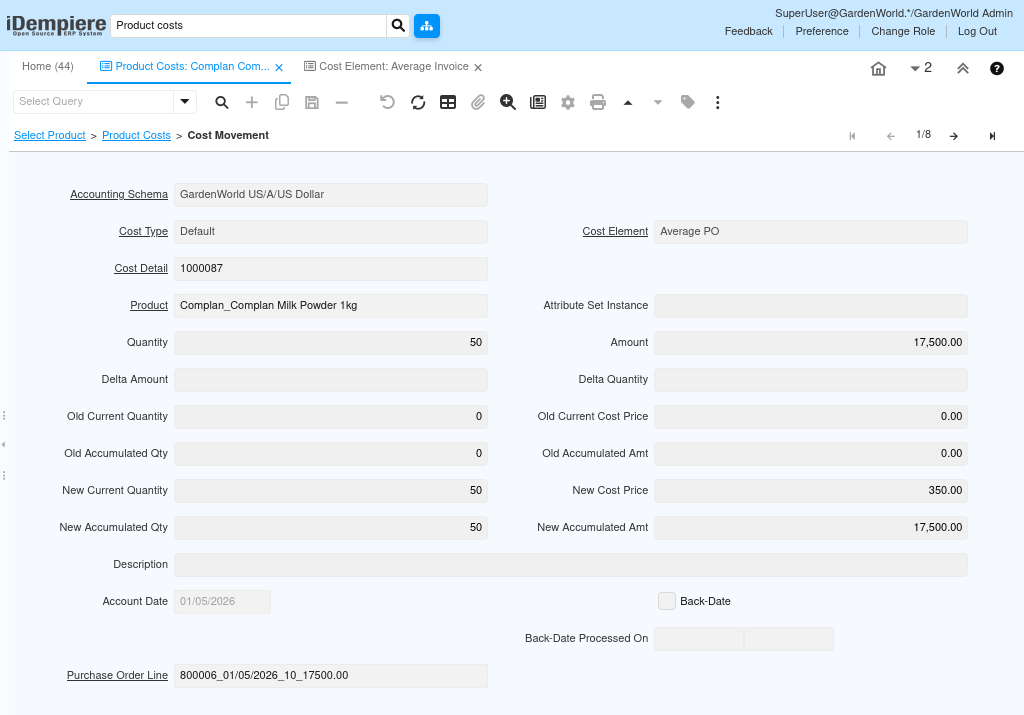
When a Material Receipt is completed, inventory physically enters the warehouse for the first time with financial value. At this point, iDempiere must prepare that value for accounting.
During completion, the system creates a Cost Movement that captures the receipt line, quantity received, and the applicable costing method. This record represents a positive cost movement, meaning inventory value is increasing.
The Cost Movement does not decide the cost itself. It carries forward the cost determined by costing logic so that inventory valuation can later be posted correctly.
Outbound Inventory Flow
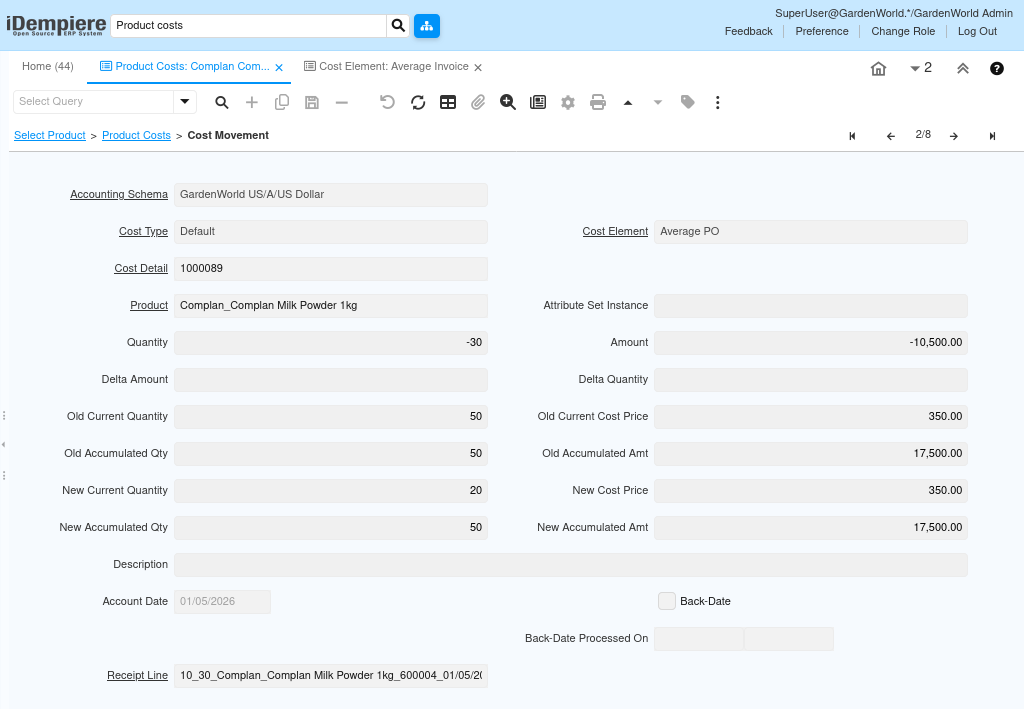
When a shipment (customer) is completed, stock physically leaves the warehouse and inventory value must be reduced. This reduction must follow the active costing method to ensure accurate valuation.
At completion, iDempiere generates a cost movement that references the shipment line and records a negative quantity movement. This prepares the system to relieve inventory value and recognize costs consistently with the selected costing method.
This ensures that inventory reduction and cost relief are synchronized with actual shipment timing.
Role in the Costing Architecture
Cost Movement operates between costing calculation and accounting posting. It does not replace Cost Details or Product Cost; instead, it acts as a transport layer.
- Cost Details determine how much cost changes
- Cost Movement packages that change into an inventory movement
- Accounting Facts use Cost Movement to generate ledger entries
- Product Cost reflects the updated state after movements apply
Without Cost Movement, inventory valuation would exist in isolation from accounting, creating inconsistencies between stock and financial records.
Relationship with Cost Details and Product Cost
Cost Movement operates between calculation and posting.
- Cost Details
Calculates and records cost changes per transaction - Cost Movement
Packages those changes into accounting-ready inventory movements - Product Cost
Reflects the final cost state after all movements are applied
Cost Movement does not calculate cost — it transports cost.
Why Users Rarely See It
Cost Movement is fully system-driven and never manually created or edited. Most users interact only with documents like Receipts and Shipments, while Cost Movement works silently in the background.
Even though it is invisible in daily operations, it is essential for audit-safe inventory valuation and accurate financial posting. Any missing or broken Cost Movement immediately leads to valuation or accounting errors.
Use Cases
Cost Movement ensures:
- Inventory assets are valued correctly
- Stock increases and decreases flow cleanly into accounting
- Cost relief aligns with shipment timing
- Financial statements reflect real inventory state
It is critical for:
- Inventory-heavy businesses
- Audit-compliant costing
- Reliable COGS calculation
- Freight and landed cost propagation
Outcome
- Cost Movement is created only for physical inventory movements
- Purchase Orders and Sales Orders do not generate Cost Movement
- Material Receipts create positive Cost Movements
- Shipments create negative Cost Movements
- It prepares inventory cost data for accounting posting
- It guarantees consistency between warehouse, costing, and finance
Cost Movement is the silent enforcer that keeps iDempiere’s inventory costing and accounting perfectly aligned.