How Receivables Write-Off Works in iDempiere
Receivables Write-Off is the controlled process used to close unpaid or partially paid customer invoices when recovery is no longer expected. Instead of cash receipt, the invoice is settled through accounting, keeping Accounts Receivable accurate, auditable, and aligned with financial reality.
Process Flow
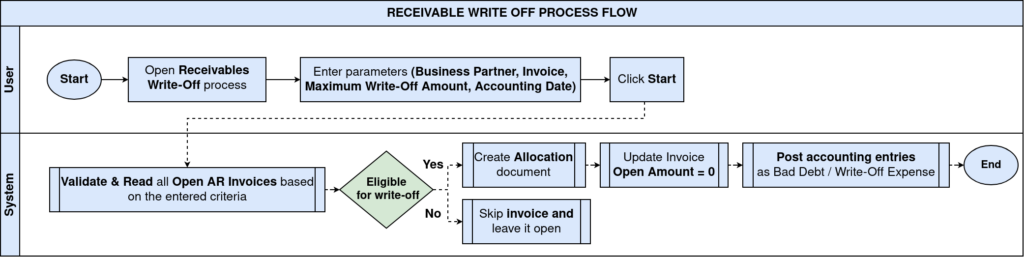
Write-Off Scope Definition
Receivables Write-Off works through criteria-based selection, not manual invoice edits. The user defines which invoices are eligible, and the system evaluates them automatically.
The scope is defined by configuration choices such as:
- Business Partner or Business Partner Group
- Specific Invoice (optional, for targeted write-off)
- AP–AR selection set to receivables only
- Maximum write-off per invoice
- Invoice date range and accounting date

These controls ensure write-offs follow company policy, accounting periods, and approval limits.
Processing Behavior
When the process is started, iDempiere scans all invoices that match the criteria and checks their open balance against the allowed write-off threshold. Only eligible invoices are processed.
For each qualifying invoice, the system:
- Identifies the remaining open amount
- Confirms it is within the permitted write-off limit
- Prepares the accounting settlement automatically

No invoice data is edited directly. The system relies entirely on allocation and accounting logic.
Allocation Creation and Accounting Flow
Instead of creating a real payment, iDempiere generates a manual payment allocation document. This allocation acts as the financial bridge that closes the invoice.
Accounting impact is generated during posting:
- Accounts receivable is cleared
- The write-off amount is posted to the configured bad debt or write-off expense account
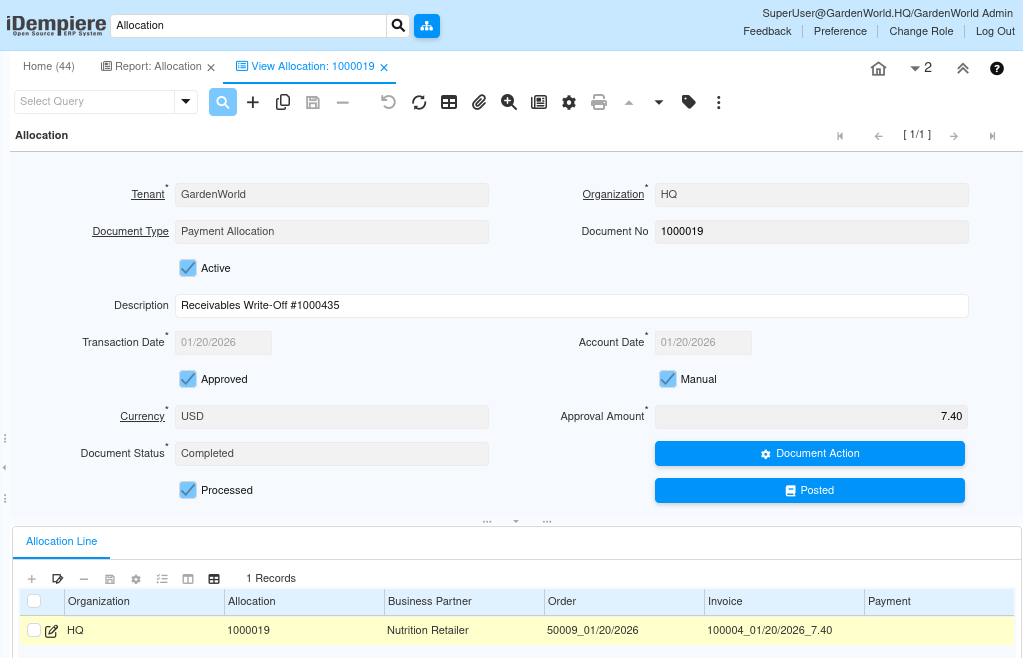
This keeps financial statements balanced and traceable
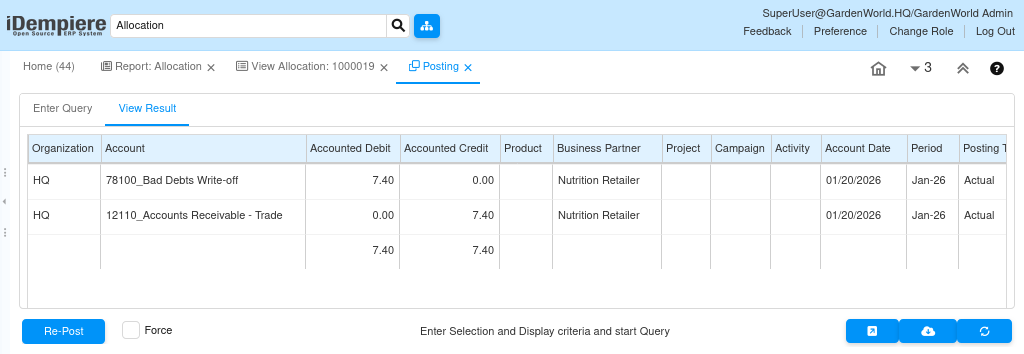
This keeps financial statements balanced and traceable
Invoice Status After Write-Off
After posting, the invoice remains completed and posted, but its financial state changes. The open amount becomes zero because the allocation satisfies the balance. There is no actual payment record unless the Create Payment option was explicitly enabled.
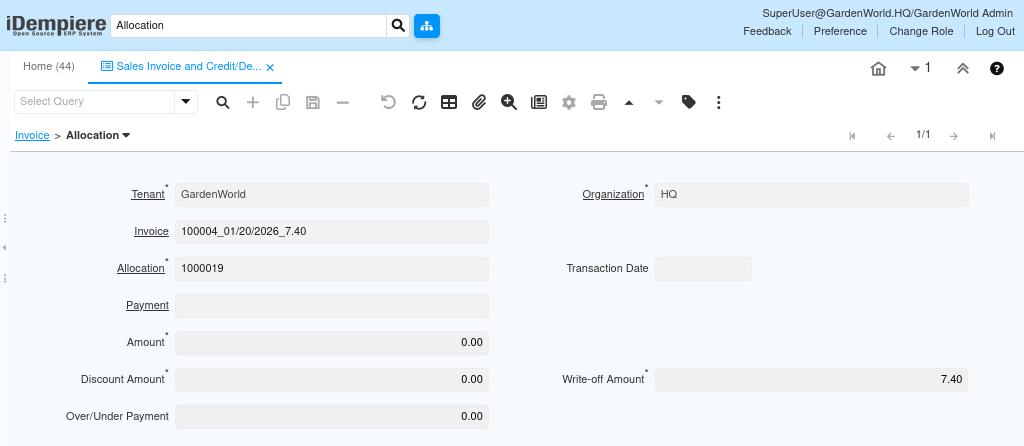
From an AR perspective, the invoice is now fully settled.
Practical Usage in Operations
Receivables Write-Off is typically used during month-end or year-end cleanup, customer account reconciliation, and credit control reviews. It prevents inflated receivables, improves ageing accuracy, and ensures overdue balances reflect real collectability.
Because the process is parameter-driven, auditable, and posted through standard accounting, it provides a safe and compliant way to handle unavoidable revenue losses without distorting sales or cash reports.
Key Characteristics
- No cash movement is involved
- Always processed via allocation and posting
- AR is cleared without modifying invoice lines
- Fully traceable from invoice to allocation to accounting
This design keeps financial data consistent while giving finance teams precise control over receivables closure.