How Product Cost Works in iDempiere
Product Cost in iDempiere represents the internal value of inventory, not the selling price. It reflects what a product truly costs the business, is recalculated from real transactions, and ensures inventory valuation, COGS, and margin reporting stay aligned with reality.
Where Product Cost Is Maintained
Product Cost is not stored as a single number. Instead, it is maintained as a set of calculated cost records tied to the product and accounting rules.
Each cost record is determined by:
- Accounting Schema
- Cost Type
- Cost Element
- Costing Method
- Product
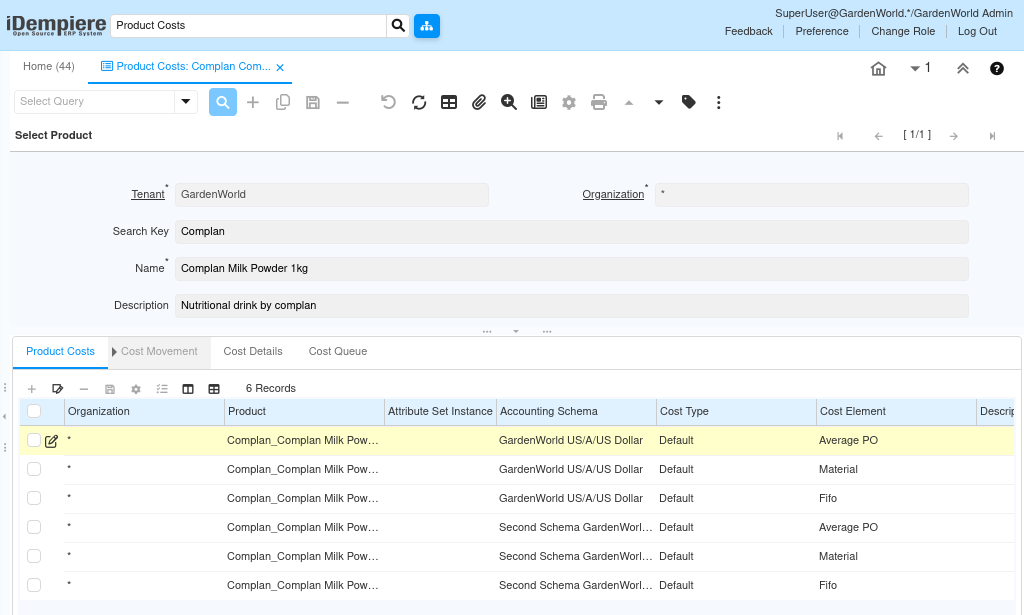
This structure allows the same product to be evaluated under multiple accounting perspectives without conflict.
Role of the Accounting Schema
The Accounting Schema defines how costs behave globally. It controls the costing method, costing level, currency, and posting behavior.
Once the costing method is defined in the accounting schema, every product cost follows that logic automatically. The product itself does not override this behavior.
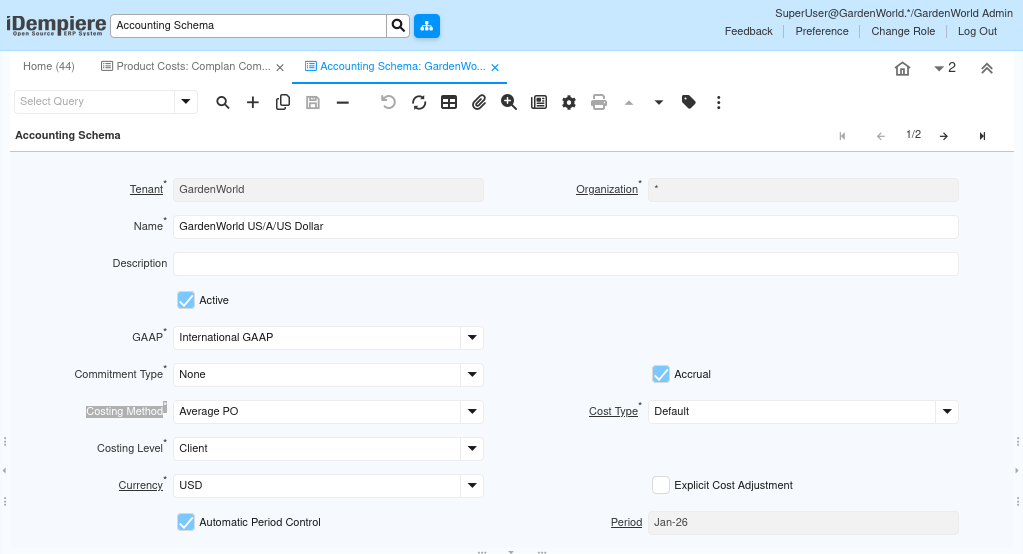
Because of this, product cost is always consistent across inventory, shipments, and accounting entries.
Understanding Cost Elements
Cost Elements explain what type of cost is being tracked, not how it is calculated. Each cost element represents a specific cost component,
Common elements include:
- Material
- FIFO
- Average PO
- Labor
- Burden
- Overhead
- Outside Processing
These elements coexist to support different costing and reporting needs.
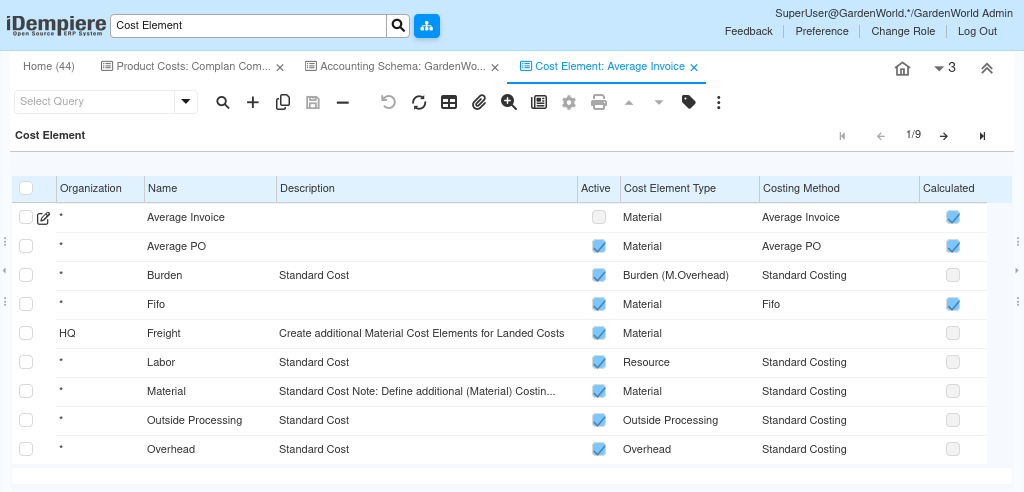
Only the cost element aligned with the active costing method actively drives postings, while others remain available for reference and analysis.
How Product Cost Is Calculated
Product cost is built entirely through transactions. There is no manual “set cost” action in normal operations.
Cost increases occur when:
- Purchase Receipts are completed
- Purchase Invoices are matched
- Landed costs or freight are capitalized
Cost decreases occur when:
- Shipments are completed
- Inventory is consumed or issued
Each transaction adjusts the accumulated quantity and amount, which recalculates the unit cost automatically.
Reading Product Cost Fields
Inside the Product → Costs tab, the key fields explain how the cost was derived.
The Current Cost Price shows the system-calculated unit cost.
The Current Quantity shows how much inventory contributes to that cost.
The Accumulated Amount shows the total value behind the calculation.
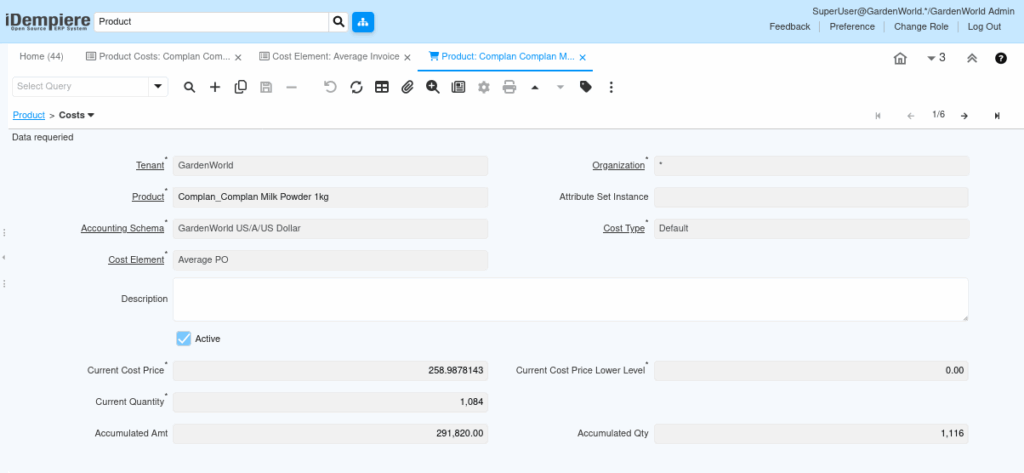
These values update immediately after each relevant transaction.
Why Product Cost Differs from Sales Price
Sales price and product cost serve completely different purposes.
Sales price is driven by:
- Price Lists
- Discount Schemas
- Business Partner rules
Product cost is driven by:
- Purchase history
- Inventory movements
- Costing method logic
This separation ensures discounts, promotions, or negotiated prices never distort inventory valuation or financial accuracy.
Product Cost During Shipment Posting
When a shipment is completed, iDempiere does not look at the sales order value. It reads the current product cost, multiplies it by the shipped quantity, and posts accounting entries accordingly.
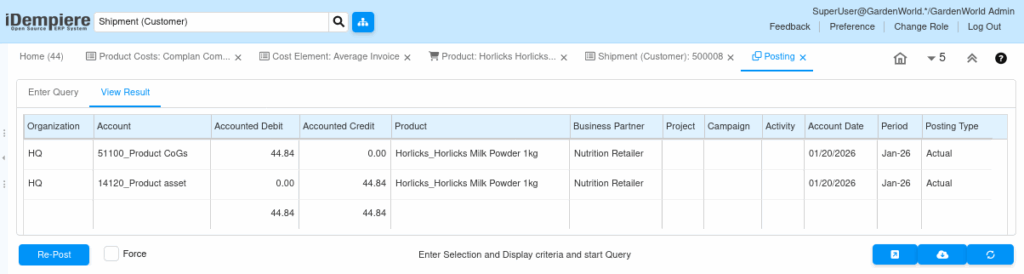
This explains why shipment postings often show amounts lower or higher than the sales order total. The system is posting cost, not revenue.
Impact of Costing Methods
The active costing method directly affects product cost behavior.
- FIFO uses the oldest available inventory cost
- Average PO recalculates weighted average after each receipt
- Standard Cost uses predefined values unless adjusted
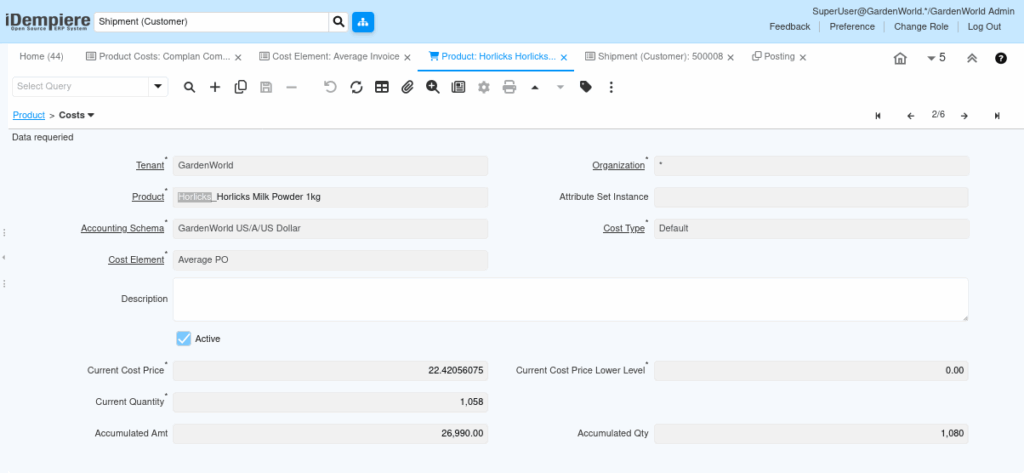
In your case, the Average PO method explains the decimal-based cost values seen during shipment posting.
Business Value of Product Cost
This design ensures inventory and accounting always reflect reality. It supports high-volume operations, fluctuating purchase prices, freight-inclusive costing, and audit-ready financials.
Product Cost enables:
- Accurate inventory valuation
- Correct COGS posting
- Reliable margin analysis
- Clear traceability from purchase to shipment
Outcome
After understanding Product Cost:
- Shipment posting differences are fully explainable
- Inventory valuation becomes transparent
- Margin reports become trustworthy
- Cost audits require no manual reconstruction
Product Cost becomes a living financial truth, continuously shaped by real business activity.