How to view Sales VAT Report in Adempiere Retail
The total sales made and the VAT (Value Added Tax) collected on those sales during a specific period.
User Access
Who Can Access
- Admin
- Back Office
- Purchase Manager
- Manager
What User Can Do
- Monitor VAT Collected
- Verify Sales and Tax Data
- Prepare for VAT Returns
Pre-Requisite Activities
- Record All Sales Transactions Accurately
- Maintain Updated Product and Tax Master Data
- Reporting Period
- Validate Data Completeness
Business Rules
- Include Only Valid and Finalised Sales
- Separate Taxable Value and VAT Amount
- Adjust for Returns and Credit Notes
- Use Accurate Transaction Dates
User Interface
STEP 1: To select a Sales VAT Report (new).

STEP 2: To enter a Date range in this field is mandatory. And then to click the start check box to run the process.

STEP 3: Once to complete the process to show the report based on the given data.
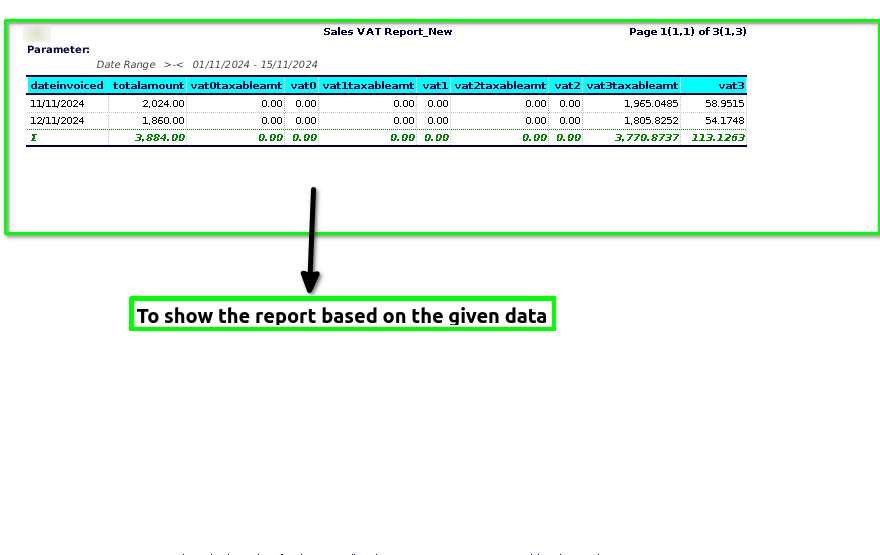
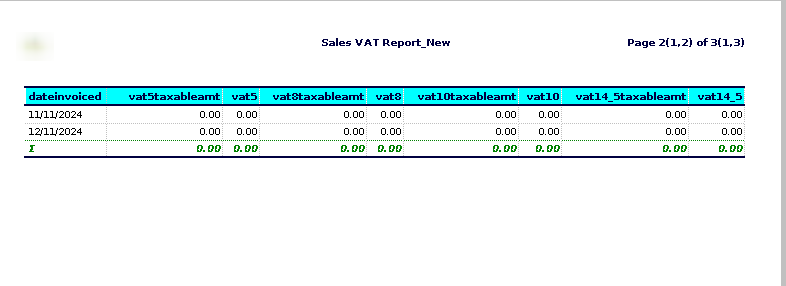

STEP 4: Date invoiced– refers to the specific date on which an invoice is created or issued to a customer. This is the date when the goods or services are billed, marking the formal request for payment.
Total amount– on an invoice refers to the full sum of money that the customer is required to pay for the goods or services provided.
VAT (Value Added Tax) 0,1,2,3,5,8,10,14,15- is a type of indirect tax that is applied to goods and services at each stage of production or distribution. It is typically levied on the value added to a product at each step in the supply chain.
VAT taxable amount 0,1,2,3,5,8,10,14,15-refers to the amount on which Value Added Tax (VAT) is calculated. In other words, it is the base value of a transaction (such as the sale of goods or services) to which VAT is applied.
Total VAT (Value Added Tax) amount– is the sum of tax charged on a product or service based on its value. It is calculated by applying the VAT rate to the price of goods or services.
Total taxable amount-refers to the portion of income, sales, or transactions that are subject to taxation by a government authority. The specifics can vary depending on the type of tax (income tax, sales tax, etc.), but in general, it represents the amount after applying all relevant exemptions, deductions, or allowances that can be taxed.