How to view Stock Transaction Report in Adempiere Retail
A Stock Transaction Report is a record that shows all the movements of stock in and out of inventory.
User Access
Who Can Access
- Admin
- Back Office
- Purchase Manager
- Manager
What User Can Do
- Track All Stock Movements
- View Transaction History
- Monitor Stock Flow
- Analyze Stock Usage
Pre-Requisite Activities
- Product Master Data Entry
- User Role & Permissions
- Stock Entry/Opening Balance
Business Rules
- Record Every Stock Movement
- Real-Time Updates
- No Negative Stock (if disallowed)
- Validate Source and Destination
User Interface
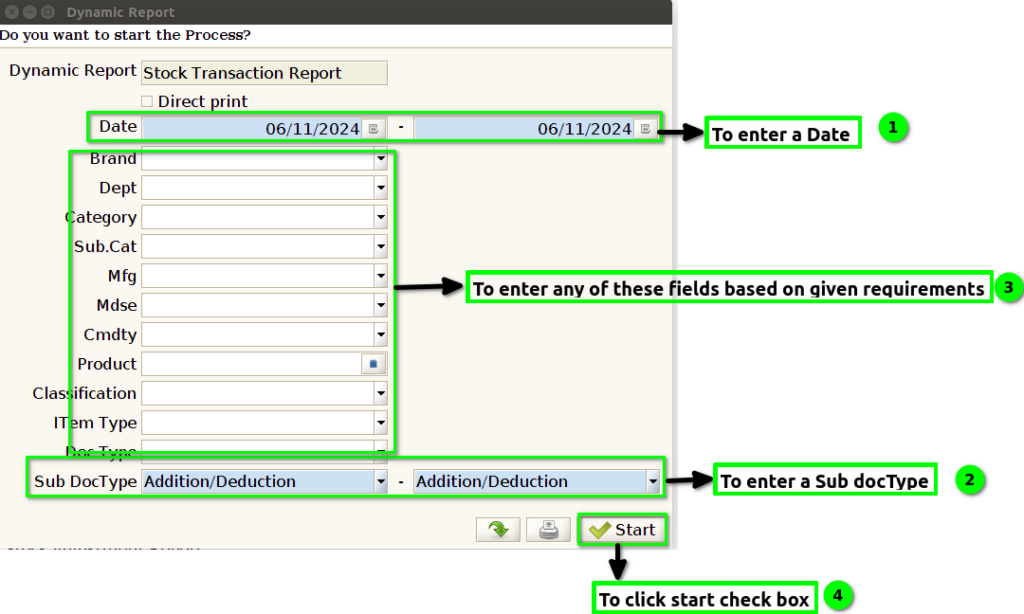
STEP 1: To Select the Stock Transaction Report.

STEP 2: To enter a date and to enter a Sub Doc Type.To enter any of these fields based on the given requirements.Date and Sub doc type field is mandatory.Finally to click the start check box.To run the process.
STEP 3: Once to complete the process to show the report from given data.
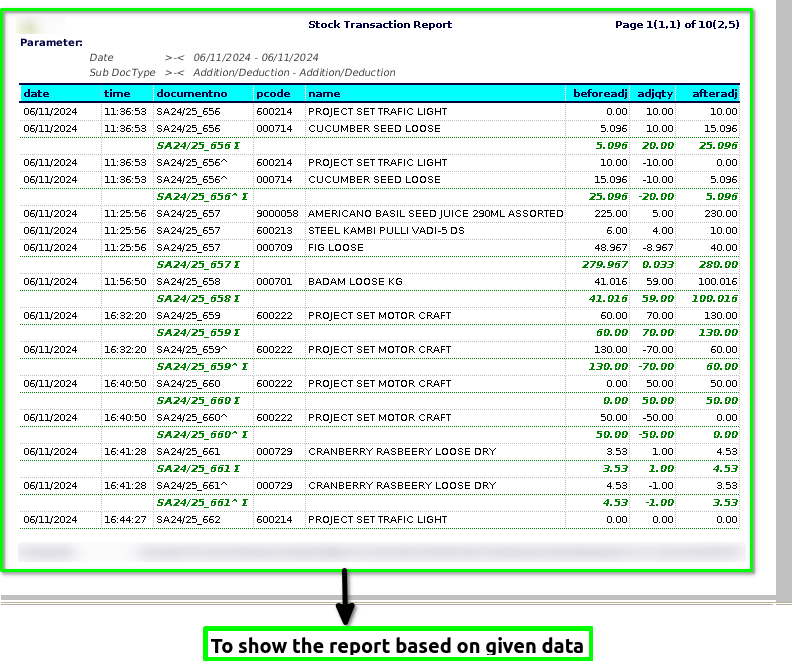


STEP 4: Date– refers to the specific day on which a buy or sell order for a stock is executed in the market. It’s the date when the transaction is completed.
Time-refers to the specific time of day when a stock trade is executed.
Document No– typically refers to a unique identifier or reference number assigned to a specific document for tracking, sorting, or organizational purposes.
Product code-is a unique identifier assigned to a specific product, often used to track and manage inventory, sales, and orders in various business and retail settings.
Product name-is the specific name given to a product or item to identify it and distinguish it from other similar products.
Before Quantity Adjustment– This represents the initial state or the quantity level of a product before any changes are made. – It is the quantity recorded in the system (such as an inventory management system, sales database, etc.)
After Quantity Adjustment – This is the updated or corrected quantity after the adjustment has been made. – The adjustment could be due to a variety of reasons, such as restocking, inventory corrections, returns, damaged goods.
Adjustment quantity-generally refers to a modification made to a specific quantity of goods or services in response to a change in circumstances, such as errors, discrepancies, or the need for reconciliation.
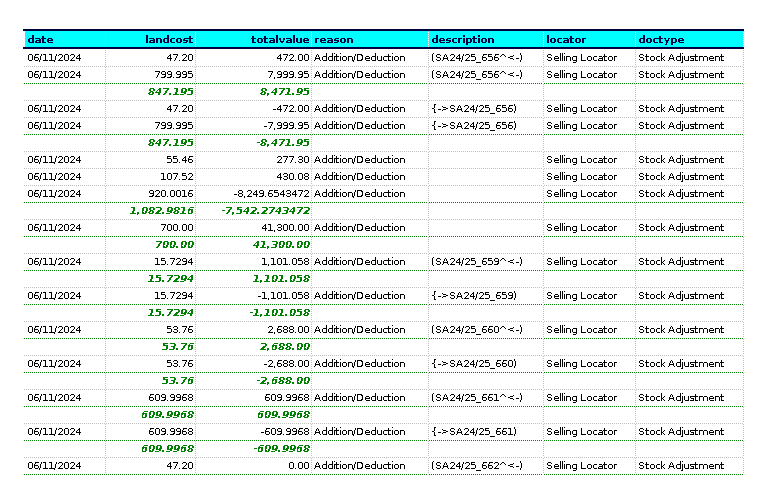
Land cost– refers to the total cost of a product once it has arrived at its destination, ready for sale or use.
Total Value-refers to the overall value or worth of a product based on various factors such as its price, quality, utility, and the costs associated with its production or acquisition.
Reason – is the capacity for consciously making judgments, forming conclusions, and solving problems based on logic and evidence.
Description– is a detailed account or explanation of something, providing information about its characteristics, features, or qualities.
Locator- generally refers to a tool or device used to find or pinpoint the position of something.
Document type & Sub document type- generally refers to the category or format of a document. It specifies the structure, purpose, and sometimes the technology or standard used to create or interpret the document. Sub document type generally refers to a specific kind of document or data structure that is part of a larger, primary document or database entity.
Product Department-is a functional area within a company that is responsible for the strategy, design, development, and overall life cycle of a company’s products or services.
Category & Sub Category– refers to a group of related products that share similar characteristics, functions, or uses.product category of Electronics, you might have the subcategory of Smartphones.
Brand- refers to the identity or image that a company creates around a specific product or line of products. It includes the name, design, logo, symbol, tagline, and overall reputation that differentiates that product from others in the marketplace.
Manufacturer– is a company or entity responsible for producing goods or products. This process typically involves transforming raw materials, components.
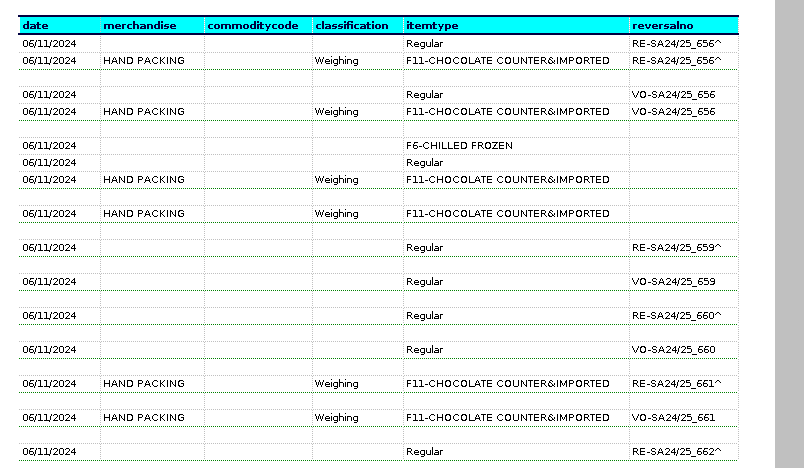
Merchandise– refers to goods or items that are created and sold to promote a brand, business, or event.
Classification -refers to the process of categorizing products based on their characteristics, features, usage, or target market.Its include Weighing products.
Item type -generally refers to a classification or category that is used to describe the specific nature or characteristics of a product within a system, inventory, or catalogue.
Reversal –Typically refers to the process or action of reversing a previous transaction involving a product.
Reversed date– is not a widely recognized or standard concept in most industries, but based on the context Product Expiration or Manufacturing Date Reversal,Date of Production and Reverse Logistics.