How to view Serial No/IMEI Wise Stock Report in Adempiere Retail
A Serial No. IMEI Wise Stock Report lists stock items by their unique Serial Numbers or IMEI numbers, showing details like item name, quantity, location, and status.
User Access
Who Can Access
- Admin
- Cashier
- Sales Manager
- Manager
What User Can Do
- Track Individual Items
- Locate Stock
- Verify Stock Status
- Support Returns & Exchanges
Pre-Requisite Activities
- Capture Serial/IMEI Numbers
- Inventory System Configuration
- Accurate Stock Updates
- Location Tracking
- Data Validation
- User Roles & Permissions
Business Rules
- Unique Serial/IMEI Numbers
- Accurate Stock Status
- Complete Item Details
- Location Tracking
- Data Validation
User Interface
STEP 1: To select a Serial No / IMEI Wise Stock Report.

STEP 2: To enter a Dynamic Report field default update.

STEP 3: Once to run the process to show the report based on given parameter.
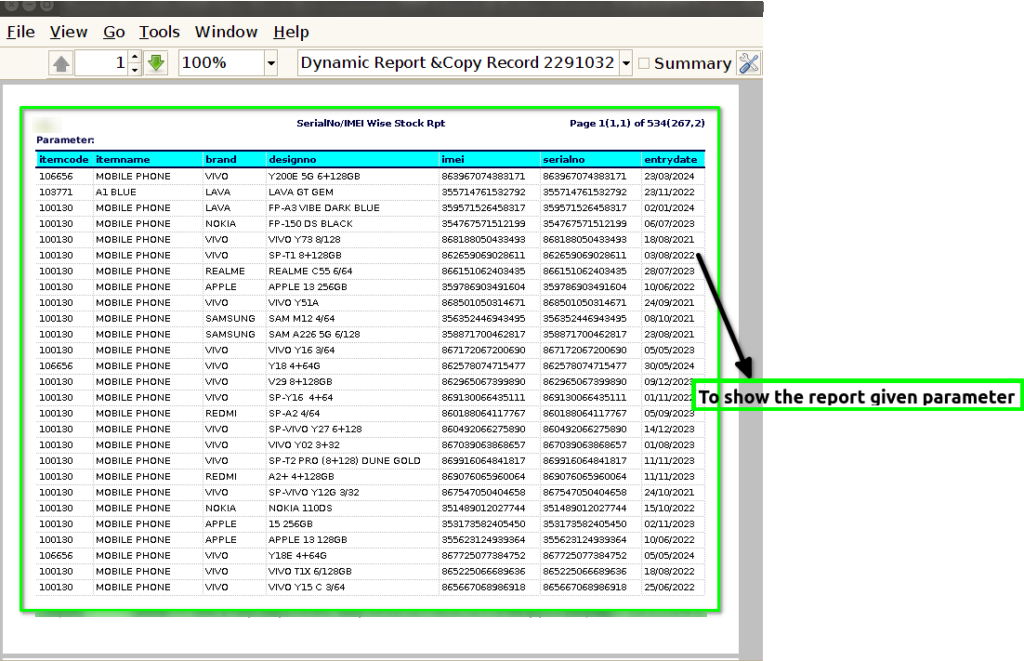
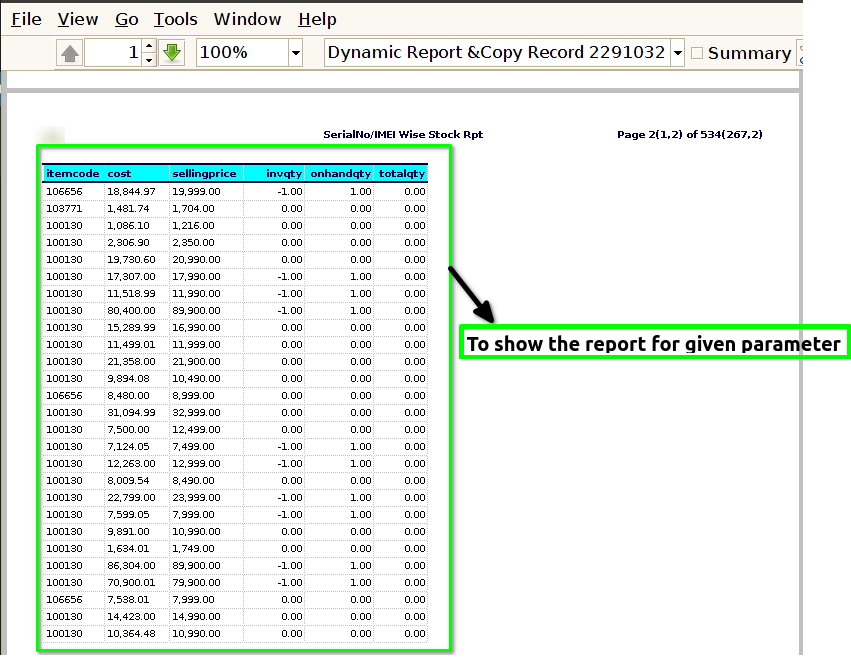
STEP 4: Item code– An item code is a unique identifier assigned to a specific product or item, often used in inventory management & retail.Item codes can take various forms, such as barcodes, SKU (Stock Keeping Unit) numbers, or product IDs. Each code typically contains information about the product, such as its category, size, or color.
Item Name-An item name is the title given to a specific product or good. It typically provides clear information about what the item is, helping customers and employees identify it easily. For example, “Men’s Running Shoes,” “Organic Green Tea,” or “17-inch Laptop Bag” are all item names.
Brand-A brand is a unique identity that distinguishes a company or product from others in the market. It encompasses various elements, including the name, logo, design, messaging, and overall reputation.Brands can represent individual products (like Nike or Apple) or entire companies (like Coca-Cola or Samsung) .
Design no-A design number is a unique identifier assigned to a specific design or style of a product, often used in, manufacturing, or product development. It helps differentiate between various designs or versions of a product, making it easier to manage inventory, track sales, and communicate with suppliers or retailers. Design numbers can include alphanumeric characters . They are especially common in industries like apparel, furniture, and home goods.
IMEI– stands for International Mobile Equipment Identity. It’s a unique 15-digit number assigned to mobile devices, such as smartphones and tablets. Identification: It uniquely identifies a device on mobile networks. Security: Carriers can blacklist a device using its IMEI number if it’s reported lost or stolen, preventing it from accessing network services.Tracking: It helps in tracking devices for various purposes, including theft recovery.
Serial no-A serial number is a unique identifier assigned to an individual product or item, distinguishing it from others of the same model or type. It typically consists of a combination of letters and numbers and is used for various purposes.
Entry Date-The entry date typically refers to the date when an item, product, or record is added to a system, database, or inventory.
Cost-Cost refers to the amount of money required to acquire, produce, or maintain a product or service. It can be categorized into several types, including: Direct Costs, Indirect Costs,Fixed Costs ,Variable Costs.
Selling price-The selling price is the amount at which a product or service is offered for sale to customers. The desired profit over and above the cost, which is often expressed as a percentage. The selling price is crucial for businesses as it affects revenue, profitability, and market positioning.
Inv Qty-Inv qty” typically stands for “inventory quantity.” It refers to the number of units of a particular item that a business currently has in stock. Inventory Management,Order Fulfillment,Financial Reporting: Plays a role in calculating the value of inventory on hand for accounting purposes. Monitoring the inventory quantity allows businesses to make informed decisions about purchasing, sales, and production.
On hand Qty-On-hand quantity refers to the actual number of units of a specific item that are physically available in inventory at a given time. Stock Management,Order Processing,Financial Reporting: Contributes to assessing the value of current assets in inventory. On-hand quantity is typically updated regularly through inventory counts and management systems to reflect any changes due to sales, returns, or new stock arrivals.
Total Qty-Total quantity” refers to the overall number of units of a specific item in inventory, encompassing all available stock, including items that are on hand, in transit, or reserved for pending orders. Inventory Management, Order Fulfillment, Replenishment Planning, Financial Analysis.